Leaning tree after a storm: when it's an emergency and when it can wait
Written by Mike Housand
The honest answer first: nobody can tell you for certain whether a leaning tree is coming down. Not me from your driveway, and certainly not anybody off a phone photo. What you can do is sort the leans that need dealing with tonight from the ones that can wait for a weekday, and that comes down to two things — where it would land, and whether anything is still moving.
Treat it as an emergency if any of these are true
Call somebody out tonight, and keep people out from under it meanwhile, if:
- It is over the house — or a bedroom, a crawl space, the car, or the path to your door.
- It is in a power line, or a line is down near it. That is the utility's to make safe first.
- The lean has moved since you noticed it. A tree still settling is a tree that has not finished.
- The soil has lifted on the opposite side to the lean — a ridge, a crack, or a hump of turf that was flat yesterday.
- The trunk is split, or cracked, or making noise in the wind when nothing else is.
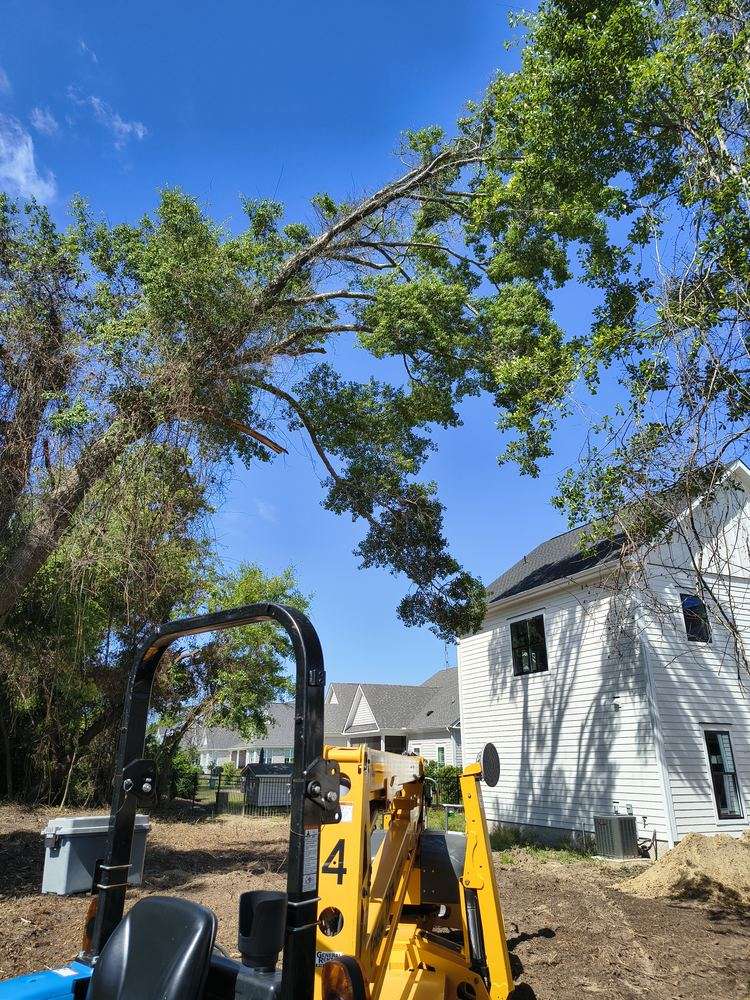
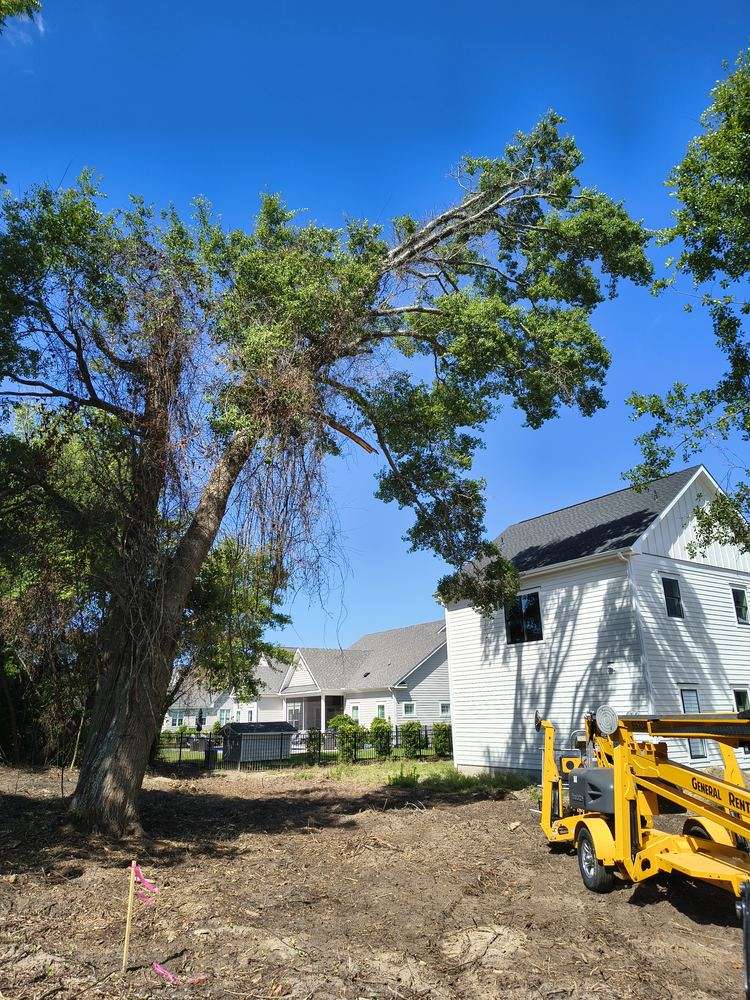
- It is hung up in another tree. One tree held off the ground by its neighbour is loaded, and nothing about what it does next is worth standing under.
My phone is answered open 24 hours a day, 7 days a week for exactly this. If a tree is already on the house, that is a different page — 24/7 emergency tree service.
Look at the base, not at the top
Everybody looks up; the information is at the bottom. A tree that grew crooked over twenty years and a tree that moved last Tuesday can lean the same number of degrees and mean completely different things, and the ground tells you which is which.
Soil heave
When a root plate starts to tip, the roots on the high side pull up and push the dirt and turf with them. You get a low mound or a crescent-shaped crack on the side away from the lean, a few feet out from the trunk. Fresh heave is dark, loose and full of broken grass roots; old settled ground is flat and grassed over. That is the single most useful thing a homeowner can look at.
The root plate
Round here it is sand over clay, and after a week of rain a lot of these pines are standing in ground that will not hold what it held in August. If the whole plate has lifted — flare out of the ground on one side, a gap opening between trunk and soil on the other — the tree is not leaning, it is falling slowly. How much root is still in the dirt is what is holding it, and you cannot see that from the surface. Neither can I.
Cracks, and what the trunk is doing
A straight trunk tilted as one piece means the problem is at the roots. A trunk curving back toward upright near the top means the tree has leaned for years and grown into it. A vertical split, a seam opening and closing, or bark lifting away in a strip is a trunk failure, and that can go without the roots doing anything. A hollow or a soft spot where the trunk meets the ground is worth a call on its own, lean or no lean.
Stay away from the lines
This is the one place I will not be gentle about it. If there is a wire in that tree, or one on the ground near it, treat every wire as live — including the ones you are sure are only cable, because a tree bridging them to a power line can energise them. Keep people and pets well back, do not drive over anything lying in the road, and call the utility before you call a tree company. We cannot work a tree with a line in it, and anybody who offers to is telling you something.
When it genuinely can wait
Plenty of them can. A pine leaning out into open yard, nothing under it, flat undisturbed ground round the base, sound trunk, same lean it had before the storm — that is a weekday job and a proper estimate, not a midnight call-out. Waiting is not ignoring, though: park somewhere else, and look at the base again in a few days, especially after the next rain. A lean that is going somewhere usually tells you inside a week or two.
What I will and won't tell you
I will walk your yard and say what I see and what I would do about it. What I will not do is give you a verdict on how much load that root plate has left, because nobody can measure that from the lawn. The tree down safely is my job.
How it comes down depends on what is underneath it. Over open grass, with room, a leaning tree is a straightforward removal. Over a roof, it comes apart in sections from a lift and gets lowered on a line — tree removal near the house is how that works. If the storm left a yard full of limbs, storm cleanup is the page you want. Either way the stump gets ground out on the same visit if you want it gone.
Questions I get asked
- Nobody can tell you that for certain, and anybody who does it off a phone photo is guessing. What I can tell you is which signs mean get everyone out from under it: fresh soil lifting on the opposite side to the lean, a root plate that has risen or cracked, a split up the trunk, or a lean that has visibly moved since yesterday. Any of those, treat it as an emergency.
- Where it would land, and whether it is still moving. A tree leaning over the house, over a bedroom, over the car, or touching a power line is an emergency, and my phone is answered open 24 hours a day, 7 days a week. The same lean out into open yard, with flat settled ground round the base, is usually a weekday job.
- Not with a line in it, and nor should anybody else. The line is the utility's to make safe first, so call them, keep everyone well back, and treat any wire as live even if it is on the ground. Once the line is dealt with, call me.
- Please do not. Standing under a tree that has already moved is where people get hurt, and a strap pulled tight on a loaded trunk is stored energy with nothing holding it. Keep people and cars out from under it and let us put a lift and a proper line on it.
- Nearly always — it goes through the policy and gets priced per the insurance standards rather than off my price list. Photograph it before anything moves, call your insurer, and call me. We can get the tree off while the claim is being worked out.
Not sure which one you've got?
Call and describe it — which way it leans, what is under it, what the ground at the base looks like. That is usually enough for me to say whether I come tonight or Thursday, and the estimate is free either way.