Stump grinding vs leaving the stump
Written by Mike Housand
I grind stumps for a living, so you would expect me to tell you to grind it. Not every time. Some stumps are genuinely better left where they are, and I would rather say so than take $200 off somebody for a stump doing no harm in a tree line. Here is the honest version of both sides, and what the work costs.
The case for leaving it alone
A stump is not a problem by default. It is a problem when it is in the way.
- It costs nothing. A stump nobody walks past or mows over is not charging you rent.
- It rots down on its own. Slowly — years, and a big one longer — but with no machine in the yard.
- The roots are holding the ground. On a bank or a ditch edge, a root system still knitted into the soil is doing a real job.
- A pine will not come back. Cut a loblolly and that is the end of it. If regrowth was your only worry, you may not have one.
- No chips, no traffic. Grinding means a tracked machine across the lawn and chips to deal with. In a wet February on soft turf, waiting for drier ground is sometimes the right answer, and I will say so.
The case for grinding it
- You want to mow over it. The real reason most of the time, and a good one. A stump at mower-blade height is a repair bill, and worse on a riding mower.
- Hardwoods sucker. Sweetgum and maple push shoots off the stump and the roots, and you end up mowing a thicket. Grinding stops it.
- It is against the house. I would not leave rotting wood tight to a foundation or across a crawl-space vent. I take trees down rather than inspect for pests — but if a pest company says grind it, grinding it is easy.
- You want the space back. Sod, a patio, a fence line, a bed, a wider driveway — all of it needs the stump gone and the ground level.
- You are selling. A fresh stump in a front lawn reads as a job somebody did not finish.
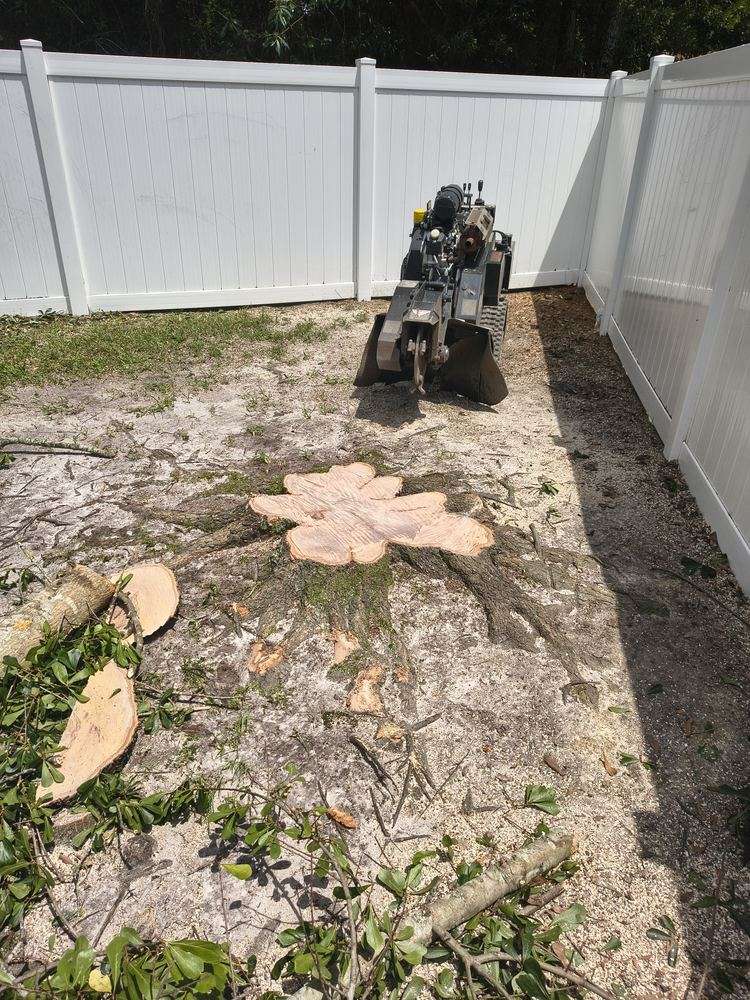
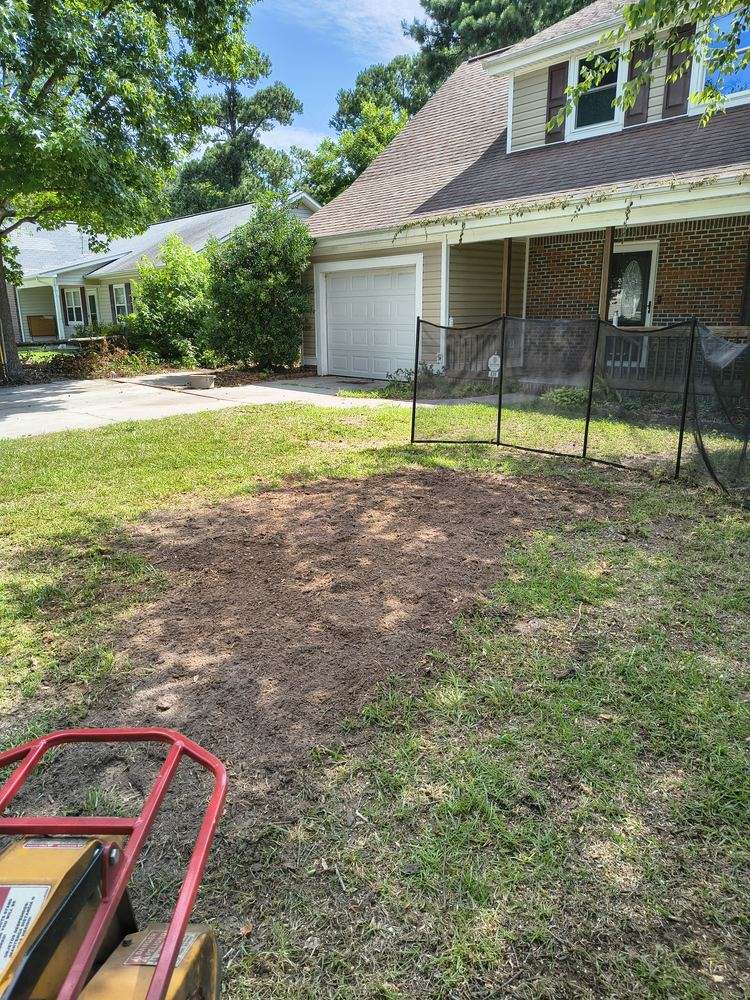
What grinding actually does — and what it doesn't
A carbide cutting wheel chews the stump into chips, up to 12 inches below grade — past the root flare and well past anything a mower blade will ever find, which is the point of the number. We push the grindings back in and level it off, so you get a patch of chips flush with the lawn instead of a crater. Hauling them away instead is included unless we agree otherwise.
Now the part nobody advertises. Grinding takes the stump and the flare, not the whole root system. The lateral roots under your lawn stay put and rot down over the following years, and you may get a soft spot or two as they go. That is also why a ground stump is not a planting hole: for a new tree there, give it a season or plant a few feet to one side. Fresh chips are hungry for nitrogen, so bring in topsoil rather than seeding straight onto chips.
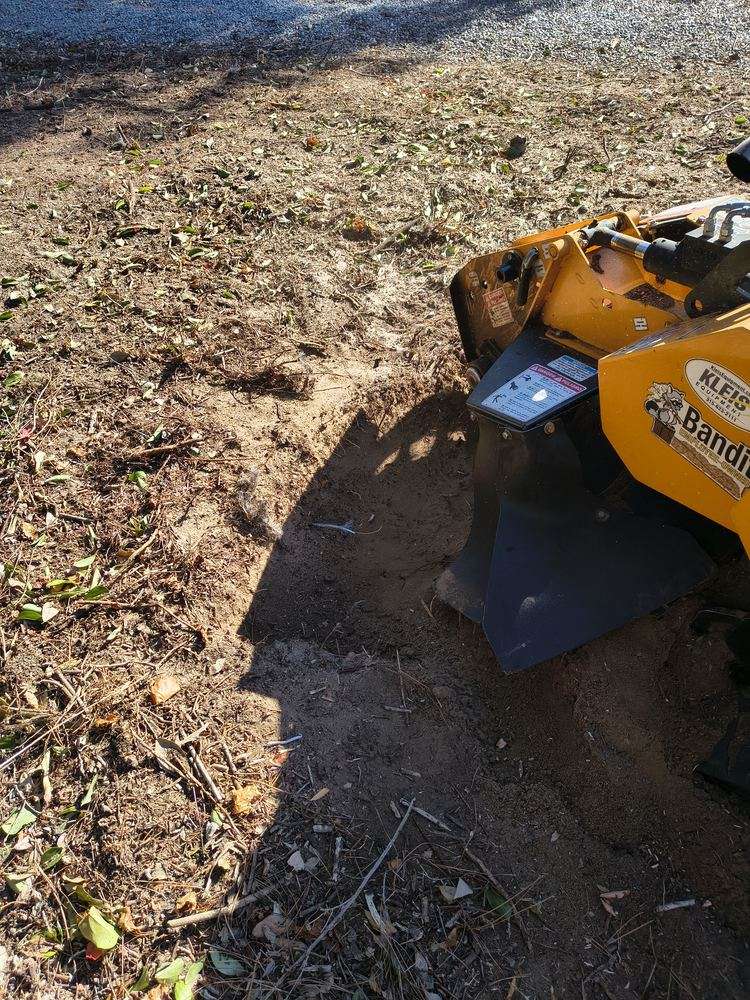
I grind. I don't dig them out.
People ask for the stump to be excavated — root ball pulled out whole. I don't offer it, and not because of the equipment. Pulling a root ball tears up several times more yard than the stump ever covered, and leaves you a hole to fill, soil to buy and a season of settling to watch. Grinding gets you the same finished lawn without any of that. There is no excavation price on my list because there is no excavation.
What it costs, and how to work it out yourself
$7 per inch of diameter, with a $200 minimum. You can price your own stump before I see it: put a tape across the widest part of the cut at ground level and multiply. A 36-inch stump comes to $252. Anything under $200 is $200 — hauling the machine out costs the same whether the stump is six inches across or sixteen.
| Job | Price | What that covers |
|---|---|---|
| Stump grinding | $7 per inch | Measured across the diameter of the cut at ground level. |
| Minimum charge | $200 | Hooking the machine up, hauling it out and unloading it. |
Measure at the ground, not the top — a stump cut high flares out underneath, and the flare is what the wheel has to get through. Two things move the price: how many you have (there is a better rate for more than one at the same address) and whether the machine can reach it. The gear fits a 36-inch gate, so a fenced back yard is ordinary, not awkward.
The full stump grinding page · all my prices, including removals
The cheapest time to grind is the day the tree comes down
If the tree is still standing, decide about the stump now. Same crew, same trip, machinery into the yard once instead of twice — the cheapest this job will ever be, which is why a removal and the grinding usually happen on one visit. If the tree has been gone ten years, that is fine too — a good share of my grinding work is somebody else's leftovers.
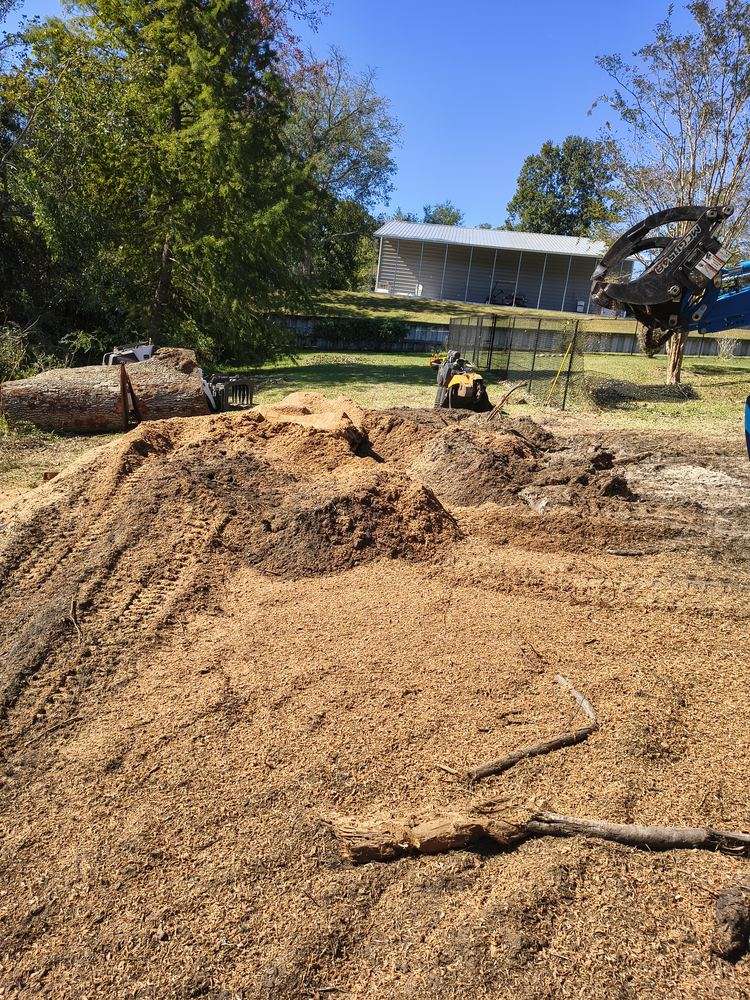
How I would decide
Stand where you would stand with the mower. Somewhere you mow, walk, park or plan to build — grind it. In a tree line, down a bank, or the corner nobody goes to — leave it, and spend the money on the tree actually leaning over your roof.
Questions I get asked
- No, and sometimes you shouldn't bother. A stump in a far corner, in a tree line, or anywhere nothing gets mown is doing you no harm — it will rot down on its own over a good many years. Grinding is $7 per inch of diameter with a $200 minimum, so it is fair to ask what it buys you first.
- No — I grind stumps, I don't dig them out. Pulling a root ball out of the ground tears up far more yard than the stump ever covered and leaves you a crater to fill and settle for a season. There is no excavation price on my list because it is not a service I offer.
- A pine won't. A fair number of hardwoods will push suckers from the stump and off the roots — sweetgum and maple are the two people call me about — and you end up mowing a thicket where the tree used to be. Grinding is what stops that.
- Rotting wood near the house is worth taking seriously, and I would not leave a stump against a foundation or across a crawl-space vent. That said, I take trees down; I don't inspect for termites. Ask a pest company what they think, and grind it if they say grind it.
- A patch of chips level with the lawn instead of a hole. We push the grindings back in and level them off, and hauling them away is included unless we agree otherwise. Chips settle over a few months, so top it with soil and seed if you want grass over it this year.
Get a number on your stumps
Tell me how many you have and roughly how wide across the cut, and I'll give you a price. If it is not worth doing, I'll tell you that too.